


Sulfur dioxide test chambers play a crucial role in assessing the durability and reliability of various materials and products. Specifically, sulfur dioxide (SO2) testing helps evaluate the potential for corrosion and degradation due to atmospheric pollution. To conduct precise and standardized tests, it is essential to understand the modulation method and operating steps of filtrate within the corrosion testing chambers, such as SO2 corrosion test chambers.
The modulation method and operating steps of filtrate are critical elements in conducting accurate and reliable SO2 corrosion testing within corrosion testing chambers. The Kesternich test procedure offers a standardized approach to evaluate material resistance to sulfur dioxide corrosion. By following the recommended steps and considering the application scenarios, industries can ensure product reliability, compliance with industry standards, and the prevention of premature failures due to SO2-induced corrosion.
| The filtrate is used to treat the exhaust gas after the test is completed. | How to Prepare Filtrate ? Modulation Method Of Filtrate 1 |
| Prepare a bottle of reagent NaOH (sodium hydroxide) and a clean plastic bucket with a capacity of approximately 20 liters. The prepared NaOH concentration is 0.5%. | |
| For Example, if the mass of NaOH is 50g, then add 9950ml of pure water to the plastic bucket. | |
| Add 50g NaOH and stir until completely melted. | |
| Pour the prepared filtrate through the filtrate inlet (located on the back of the filter box, there is a small gray funnel. Open the red valve to add the stirred filtrate) | How to Prepare Filtrate ? Modulation Method Of Filtrate 2 |
| Pour the filtrate slowly, and pay attention to the water level from the front observation window at any time. | |
| When the water level reaches the specified height (there is a liquid level line on the water level mark on the left side of the filter tank), stop adding filtrate, and then turn off the filter solution adding switch. | |
| Note: NaOH solution is corrosive to a certain extent. If it comes into contact with the skin during the preparation process, please rinse it with clean water. |
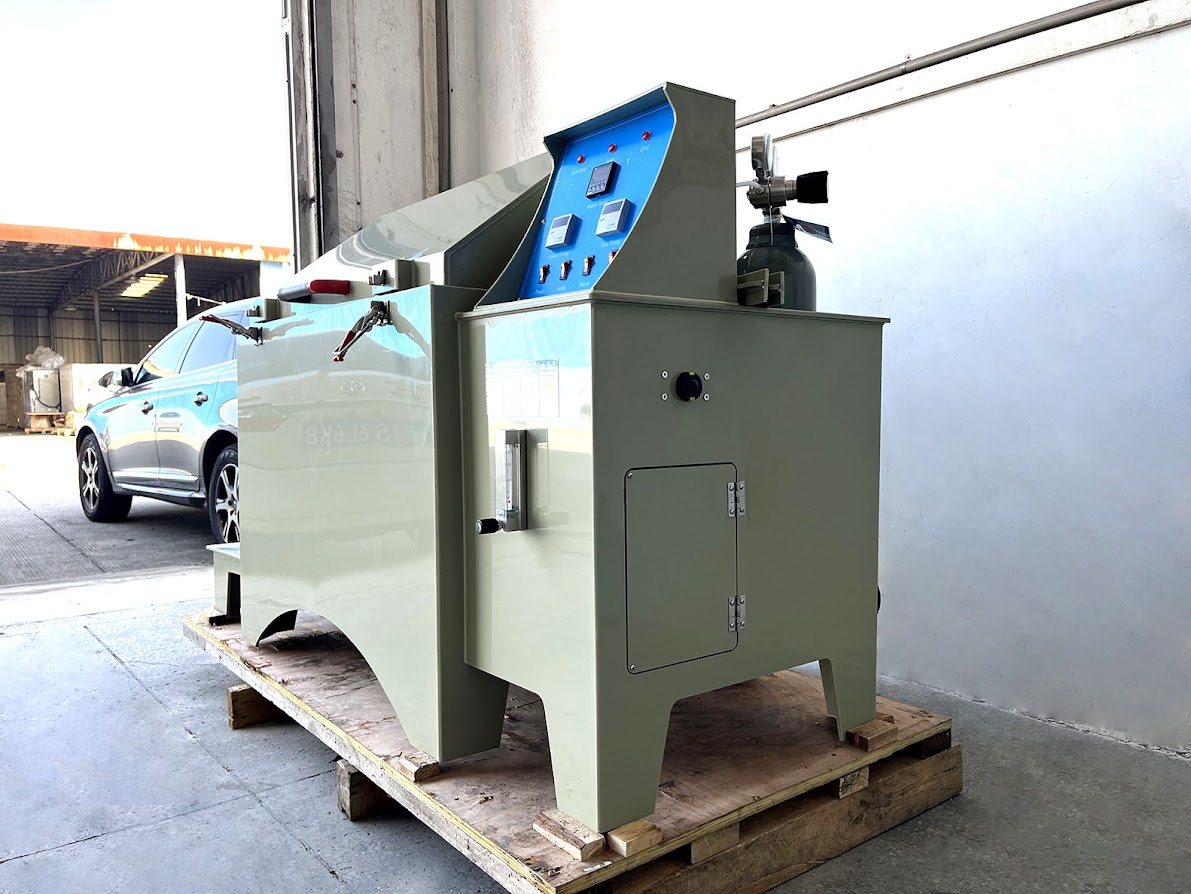
| 1. Connect the cylinder and the sulfur dioxide gas inflow pipe, and pay attention to the sealing of each interface to prevent sulfur dioxide leakage. | How to Inject Sulfur Dioxide Gas into Machine’s Test Room? |
| 2. Turn on the power switch, and slowly add an appropriate amount of pure water (no need to cover the heating pipe) into the test room sink (the water inlet is located on the back of the box, added from a gray funnel) to increase the humidity in the box. | |
| 3. Place the test samples to be tested, and then close the lid of the box. Please be sure to tighten the lid with the lock. | |
| 4. Use a wrench to open the knob on the cylinder (just open a quarter). After the air inlet switch is turned on, adjust the pressure of the pressure regulating valve to 0.1Mpa (pressure gauge at the air outlet). | |
| 5.1 Slowly rotate the flow meter knob (counterclockwise) to adjust to the required flow value. For example, if we need to introduce 200ml of sulfur dioxide gas into the test room, we can set the air intake time to 60 seconds, and then slowly adjust the flow meter to 200 ml/min. | |
| 5. 2 Turn on the air intake button. At this time, the value of the small black dot on the flow meter may drop. Quickly readjust the value to 200 ml/min and wait for the air intake timer to end. After the air intake is completed, the air intake channel will be automatically closed. At the same time, we turn off the switch knob on the cylinder. | |
| 6. Set the time required for your test. | |
| 7. When all settings are completed, turn on the working switch on the machine, and then turn on the working timing switch in sequence. After the air intake is completed, you can turn off the air inlet switch. |

Chemical Preparation & Total Corrosion Testing Solutions
Master the precise filtrate modulation and chemical preparation steps for SO2 testing. Beyond our specialized Kesternich chambers, explore our comprehensive laboratory matrix—including salt spray systems, precision curing ovens, and environmental climatic chambers—for complete material validation.


